The most common Spanish word for bedroom is “dormitorio.” However, depending on the context and region, you might also use “habitación.” This article will explore various Spanish bedroom terms, helping you master your bedroom vocabulary Spanish and confidently navigate conversations about your sleeping space in the Spanish language. We will cover everything from the basic bedroom translation Spanish to regional variations and more nuanced terms.
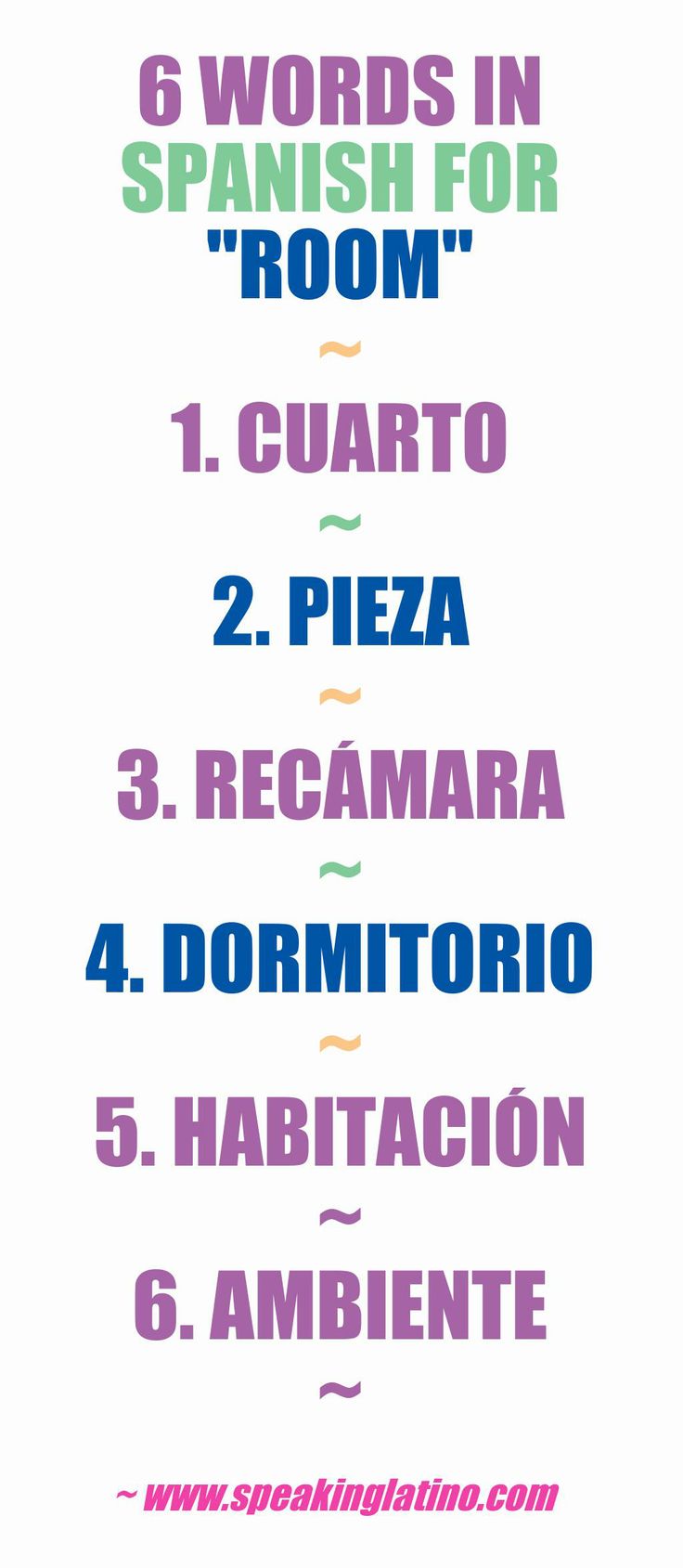
Image Source: www.speakinglatino.com
“Dormitorio”: The Standard Spanish Word for Bedroom
“Dormitorio” is generally the most widely accepted and understood Spanish word for bedroom. “Dormitorio” meaning is directly related to the act of sleeping (“dormir” meaning “to sleep”). It is a safe and reliable choice regardless of where you are speaking Spanish.
When to Use “Dormitorio”
- In formal settings: If you are filling out a form or speaking to someone you don’t know well, “dormitorio” is a professional choice.
- When clarity is crucial: If you want to ensure you are understood without regional ambiguity, “dormitorio” is your best bet.
- When discussing specific types of bedrooms: As we’ll see later, “dormitorio” can be modified to describe different types of bedrooms, such as a “dormitorio infantil” (children’s bedroom).
Example Sentences Using “Dormitorio”
- “Mi dormitorio es muy cómodo.” (My bedroom is very comfortable.)
- “Necesito limpiar mi dormitorio.” (I need to clean my bedroom.)
- “El dormitorio principal tiene un baño privado.” (The master bedroom has a private bathroom.)
“Habitación”: A More General Term
“Habitación” is another common word for “bedroom” in Spanish. However, its meaning is broader. “Habitación” Spanish refers to any room in a house or building. It can mean “room,” “bedroom,” or even “hotel room.”
Distinguishing “Habitación” from “Dormitorio”
The key difference lies in specificity. “Dormitorio” exclusively means “bedroom,” while “habitación” needs context to clarify its meaning.
When to Use “Habitación” for “Bedroom”
- Informal conversations: With friends and family, “habitación” is often used interchangeably with “dormitorio.”
- When the context is clear: If you are already discussing bedrooms, using “habitación” is usually fine.
- In certain regions: In some Spanish-speaking countries, “habitación” is the more common term for “bedroom.”
Example Sentences Using “Habitación”
- “Mi habitación está en el segundo piso.” (My bedroom is on the second floor.)
- “¿Puedo ver tu habitación?” (Can I see your bedroom?) – (Depending on context, this could also mean ‘room’.)
- “La habitación del hotel era muy pequeña.” (The hotel room was very small.) – Here, “habitación” clearly refers to a hotel room.
Regional Variations in Saying Bedroom in Spain and Latin America
While “dormitorio” and “habitación” are widely understood, regional preferences exist.
Spain
In saying bedroom in Spain, “habitación” is commonly used, especially in everyday conversation. You’ll likely hear “dormitorio” as well, but “habitación” is prevalent.
Latin America
Throughout Latin America, both “dormitorio” and “habitación” are used, with variations depending on the country and even the specific region within a country. It’s always best to listen to native speakers and adapt to their usage.
The Spanish Word for Master Bedroom: “Dormitorio Principal”
The Spanish word for master bedroom is “dormitorio principal” or “habitación principal.” Both are acceptable, with “dormitorio principal” possibly being slightly more formal.
Example Sentences Using “Dormitorio Principal”
- “El dormitorio principal tiene un vestidor grande.” (The master bedroom has a large walk-in closet.)
- “Estamos renovando el dormitorio principal.” (We are renovating the master bedroom.)
Expanding Your Bedroom Vocabulary Spanish: Essential Terms
Beyond the basic words for “bedroom,” knowing other related terms will greatly enhance your ability to discuss your sleeping space in Spanish.
| Spanish Term | English Translation |
|---|---|
| La cama | The bed |
| La almohada | The pillow |
| La manta | The blanket |
| Las sábanas | The sheets |
| El colchón | The mattress |
| La mesita de noche | The nightstand |
| La lámpara | The lamp |
| El armario | The closet |
| El vestidor | The walk-in closet |
| La cómoda | The dresser |
| El espejo | The mirror |
| La alfombra | The rug |
| Las cortinas | The curtains |
| La persiana | The blinds |
| El cuadro | The painting |
| La foto | The photo |
| El escritorio | The desk |
| La silla | The chair |
| El ventilador | The fan |
| El aire acondicionado | The air conditioning |
| La calefacción | The heater |
| El enchufe | The outlet |
| El interruptor | The light switch |
| La ventana | The window |
| La puerta | The door |
| El piso | The floor |
| El techo | The ceiling |
Describing Your Bedroom: Adjectives and Descriptive Phrases
To truly master your Spanish bedroom terms, you need to be able to describe your bedroom effectively. Here are some useful adjectives:
- Cómodo/a: Comfortable
- Grande: Big
- Pequeño/a: Small
- Luminoso/a: Bright
- Oscuro/a: Dark
- Tranquilo/a: Quiet
- Moderno/a: Modern
- Antiguo/a: Old
- Ordenado/a: Organized
- Desordenado/a: Messy
- Acogedor/a: Cozy
Example Sentences Describing a Bedroom
- “Mi dormitorio es muy luminoso y tranquilo.” (My bedroom is very bright and quiet.)
- “Tengo una cama cómoda en mi habitación.” (I have a comfortable bed in my bedroom.)
- “El dormitorio principal es grande y tiene un vestidor.” (The master bedroom is big and has a walk-in closet.)
- “Mi habitación es un poco desordenada, lo siento.” (My room is a little messy, I’m sorry.)
More Specialized Spanish Bedroom Terms
Here are a few more specialized terms you might encounter:
- Dormitorio infantil: Children’s bedroom
- Dormitorio de invitados: Guest bedroom
- Litera: Bunk bed
- Cuna: Crib
Example Sentences Using Specialized Terms
- “El dormitorio infantil está decorado con colores brillantes.” (The children’s bedroom is decorated with bright colors.)
- “Tenemos un dormitorio de invitados para cuando vienen nuestros amigos.” (We have a guest bedroom for when our friends come.)
- “Mis hijos duermen en una litera.” (My children sleep in a bunk bed.)
Common Mistakes to Avoid When Translating Bedroom to Spanish
When translating bedroom to Spanish, avoid these common pitfalls:
- Using the wrong gender: Remember that nouns in Spanish have gender. “Dormitorio” is masculine, and “habitación” is feminine.
- Direct translations that don’t make sense: Don’t directly translate phrases word-for-word. For example, instead of saying “bed room,” use “dormitorio” or “habitación.”
- Forgetting regional variations: Be aware of regional preferences and adapt your language accordingly.
Putting It All Together: A Sample Conversation
Here’s a sample conversation showcasing some of the vocabulary we’ve covered:
Person A: “¡Hola! ¿Cómo estás?” (Hello! How are you?)
Person B: “¡Bien, gracias! Estoy renovando mi casa. ¿Y tú?” (Good, thanks! I’m renovating my house. And you?)
Person A: “¡Qué bien! Yo también. Estoy pensando en redecorar mi dormitorio principal.” (That’s great! Me too. I’m thinking about redecorating my master bedroom.)
Person B: “¿En serio? ¿Qué vas a cambiar?” (Really? What are you going to change?)
Person A: “Quiero comprar una cama nueva y quizás poner cortinas nuevas. Mi dormitorio es muy oscuro.” (I want to buy a new bed and maybe put up new curtains. My bedroom is very dark.)
Person B: “Buena idea. Yo necesito organizar mi habitación. ¡Siempre está desordenada!” (Good idea. I need to organize my room. It’s always messy!)
Person A: “¡Te entiendo! ¡Es difícil mantenerlo ordenado!” (I understand you! It’s hard to keep it organized!)
Tips for Remembering Bedroom in Spanish Language Vocabulary
- Use flashcards: Create flashcards with the Spanish word on one side and the English translation on the other.
- Label items in your bedroom: Put labels on items in your bedroom with their Spanish names.
- Use language learning apps: Apps like Duolingo and Memrise can help you memorize vocabulary through interactive exercises.
- Practice with native speakers: If possible, practice speaking with native Spanish speakers.
Conclusion: Mastering Your Spanish Bedroom Terms
Learning how to say “bedroom” in Spanish, and related vocabulary, opens up a world of possibilities for communication. Whether you choose “dormitorio” or “habitación,” remember that context and regional variations matter. By expanding your knowledge of related terms and practicing regularly, you can confidently discuss your sleeping space in Spanish and improve your overall fluency. Keep practicing, and you’ll be speaking about your “dormitorio” or “habitación” like a native in no time!
Frequently Asked Questions (FAQ)
Q: What is the most accurate translation of “bedroom” in Spanish?
A: While both “dormitorio” and “habitación” can translate to “bedroom”, “dormitorio” is the more precise term specifically referring to a bedroom. “Habitación” is a more general term for “room” and requires context.
Q: Can I use “cuarto” to mean “bedroom” in Spanish?
A: While “cuarto” can mean “room” it’s best to stick to using “dormitorio” or “habitación” when referring to a bedroom to avoid any confusion. “Cuarto” is more common for describing “bathroom” or a “storage room”.
Q: How do I say “guest bedroom” in Spanish?
A: The phrase is “dormitorio de invitados” or “habitación de invitados”. Both variations are correct.
Q: What is the difference between “cama” and “lecho”?
A: “Cama” means “bed.” “Lecho” is a more formal and literary term, often referring to a sickbed or deathbed. Use “cama” in most situations.
Q: Is there a difference in pronunciation between “dormitorio” and “habitación” across different Spanish-speaking regions?
A: Yes, subtle differences in pronunciation exist. In some regions, the “s” at the end of words might be aspirated or dropped. The “h” in “habitación” is always silent in standard Spanish. Listen to native speakers from different regions to familiarize yourself with these nuances.

Hi, I’m Florence Disha, the creator behind HomesMend.com. With a passion for making every house a home, I share my personal experiences, tips, and expertise to help you transform your living spaces. Whether it’s practical advice, creative ideas, or tried-and-true solutions, my goal is to inspire and guide you in creating a home that feels just right. Let’s make every corner of your space truly yours!